

An early-stage precious-metals exploration prospect in Nevada’s Olinghouse Mining District, positioned as retained gold optionality within CDN Maverick’s broader project-generator portfolio.
Historic surface sampling reported high-grade gold within the Rainbow Canyon system, including 70.5 g/t Au in sample RCKB01 from the main dump (2018 NI 43-101 technical report). Subsequent drilling improved understanding of vein orientation, alteration and structural controls and can help refine future targets.
Early-stage precious-metals exploration project
Olinghouse Mining District, Washoe County, Nevada
55 claims covering ~458 hectares (2018 NI 43-101 technical report)
RCKB01, main dump: 70.5 g/t Au (2018 NI 43-101 technical report)
High-grade gold reported in historic surface sampling; subsequent drilling improved understanding of vein direction, alteration and structural controls
Retained Nevada gold optionality
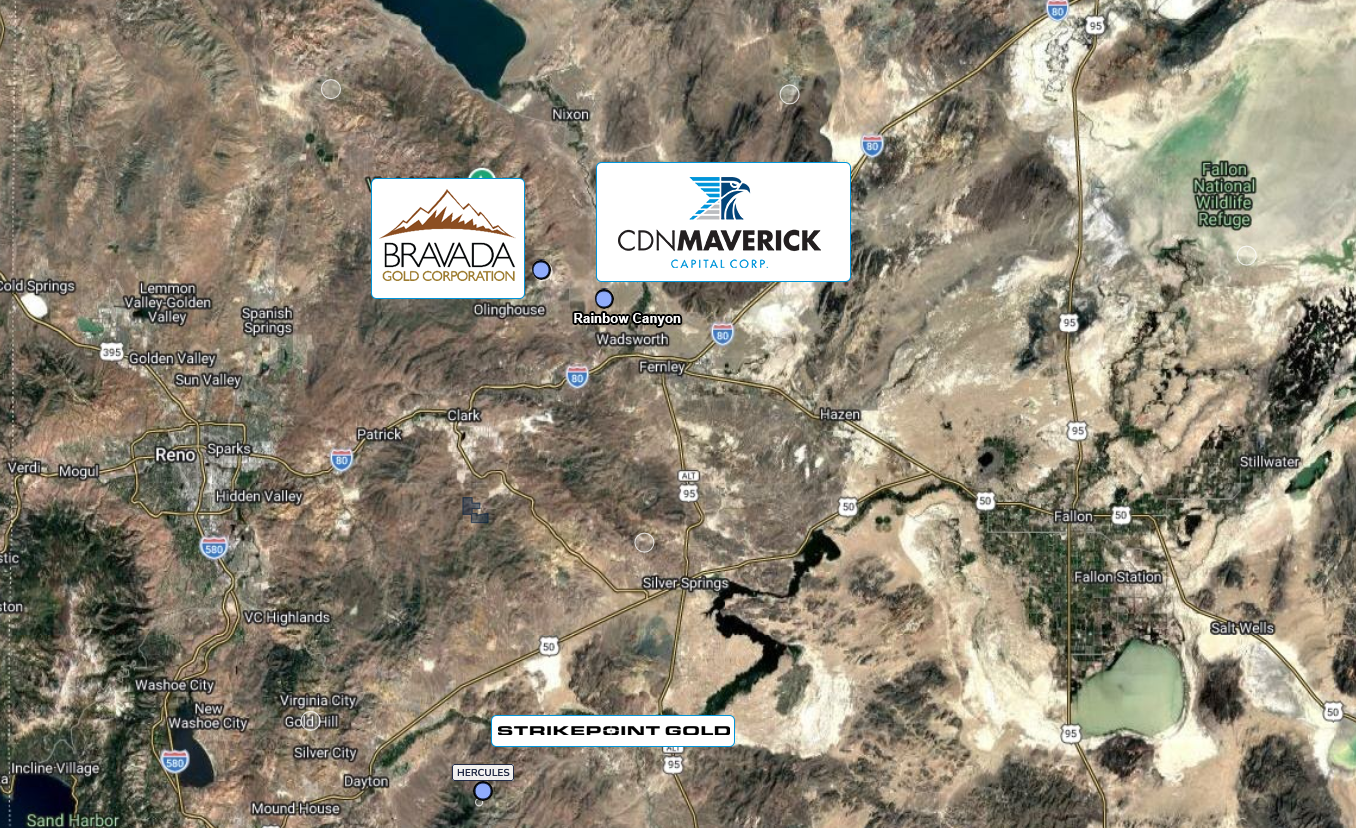
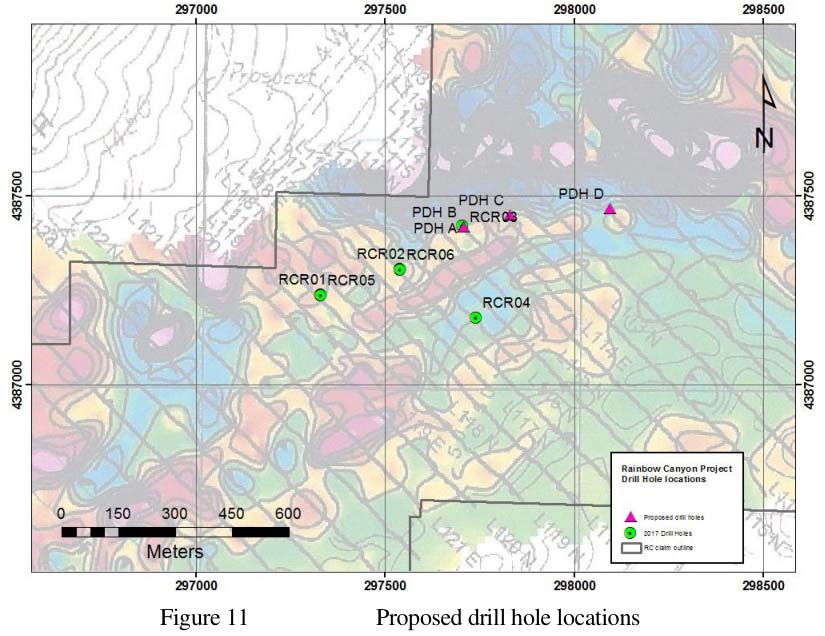
Rainbow Canyon gives CDN Maverick retained exposure to gold in Nevada’s historic Olinghouse Mining District without diverting capital or attention from its primary James Bay and Nottaway exploration focus. Located approximately 39 km (24 miles) east of Reno, the early-stage project was historically described as 55 claims covering roughly 458 hectares. A six-hole drilling program completed in 2017 improved the company’s understanding of the system’s quartz veining, alteration and structural controls, providing valuable technical context for refining potential future targets.
Rainbow Canyon adds a distinct precious-metals component to CDN Maverick’s broader project-generator portfolio, providing retained exposure to Nevada gold while James Bay and Nottaway remain the company’s primary operating focus. Historical exploration confirmed that high-grade gold occurs within the system and generated valuable geological information that could support more refined targeting should future work be warranted.
The project is located approximately 39 km (24 miles) east of Reno in Nevada’s historic Olinghouse Mining District, an established precious-metals district with a documented history of gold and silver production. The 2018 technical report described Rainbow Canyon as comprising 55 unpatented lode mining claims covering approximately 1,133 acres, or 458 hectares, within a geological setting known for narrow, locally high-grade gold-bearing vein systems.
Rainbow Canyon remains an early-stage exploration project and should not be presented as a mineral resource or advanced development asset. Historical surface work identified gold primarily within quartz veins and broad alteration corridors, while ground magnetic surveying helped define areas associated with mapped veining and alteration. A six-hole reverse-circulation drilling program was completed in 2017. The 2021 Drill Program: Intended to follow up on the 2017 structures but yielded no significant or reportable gold mineralization.
Sitting roughly 39 km (24 miles) East of Reno, the Rainbow Canyon claims sit firmly in the historically rich Olinghouse district. A region that has shown proven rich deposits of gold and other metals.
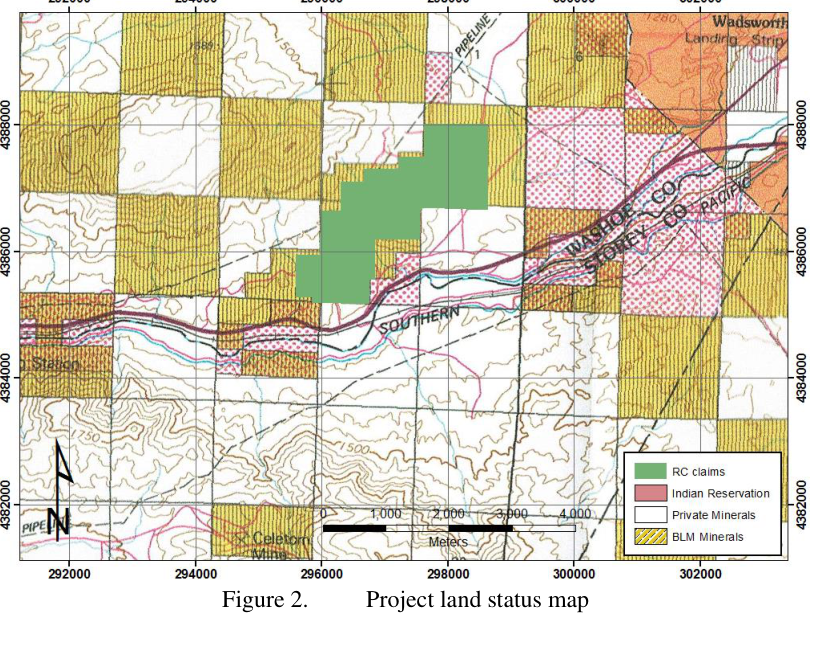
The 2018 technical report described Rainbow Canyon as comprising 55 unpatented lode mining claims covering approximately 1,133 acres, or 458 hectares. Those claims sit inside the Olinghouse district, one of the few districts in Washoe County to have produced gold in genuinely meaningful quantity.
Prospectors first worked the ground in 1860, and the district’s placers were mined more or less continuously through to about 1900. Lode mining took over at the turn of the century, and activity peaked between 1898 and 1903. Recorded production from district mines between 1898 and 1957 totalled roughly 42,705 ounces of gold and 29,155 ounces of silver, together with minor copper and lead, from just over 25,000 short tons of ore — a tonnage-to-ounce ratio that reflects the narrow, high-grade vein style also seen at Rainbow Canyon.
Modern operators returned in the 1990s. Alta Gold brought the Olinghouse deposit into production as an open-pit, gravity-and-heap-leach operation in September 1998, recovering approximately 62,661 ounces of gold before the company entered bankruptcy in 1999. The land-status map below shows the 2018 claim configuration and land-status context.
Gold identified at multiple locations, primarily in quartz veins within alteration corridors.
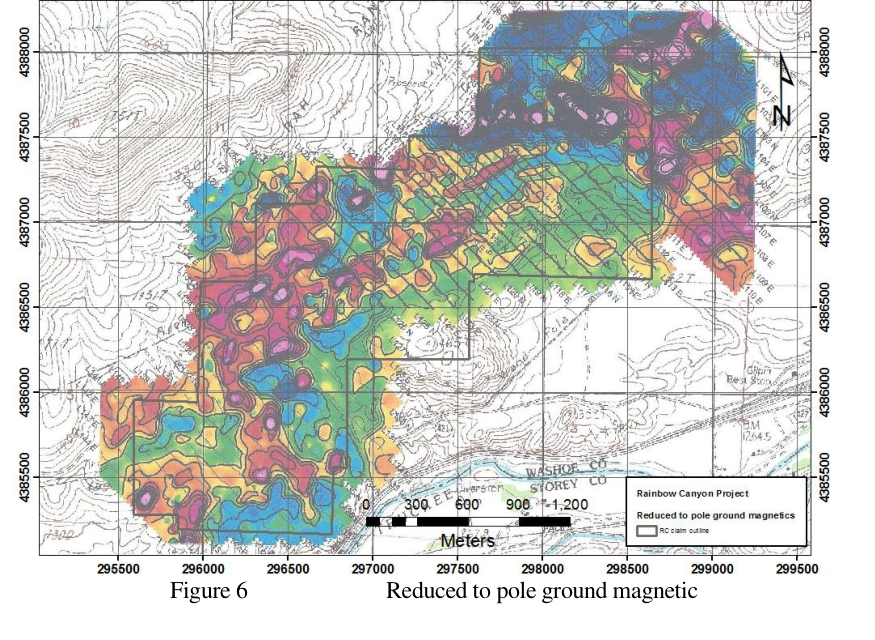
Magnetic lows interpreted to coincide with areas of veining and strong alteration.
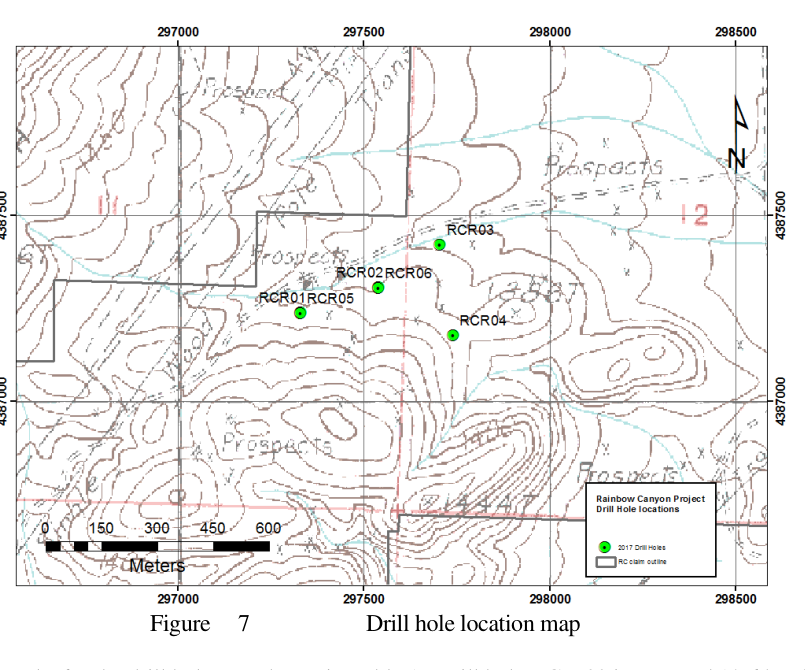
Six-hole reverse-circulation program completed in 2017.
Follow-up program was terminated without remarkable success; messaging kept evidence-led.
A six-hole reverse-circulation program was completed in 2017. The program helped refine the company’s understanding of vein orientation, alteration and structural controls across the Rainbow Canyon system.
Mineralization is associated with quartz veins reportedly up to 20 cm wide, hosted within broad zones of argillic alteration that extend along a northeast strike trend.
A completed ground magnetic survey indicated that magnetic lows coincide with many mapped areas of quartz veining and strong alteration.
A 2017 six-hole RC program was completed at Rainbow Canyon. The 2021 follow-up program is presented transparently and without overstatement.
Rainbow Canyon is the retained gold-optionality layer, while James Bay / Nottaway remains the active exploration-and-catalyst layer.
Active operating focus and near-term exploration catalyst.
Retained early-stage gold optionality in Nevada.
Legacy proof-of-model and management track-record exposure.
Marketable-securities exposure to Arizona gold through Kingman Minerals shares and warrants.
Strategic lithium exposure under a monetized transaction structure.
Rainbow Canyon adds precious-metals optionality while CDN Maverick advances its primary James Bay / Nottaway exploration focus.
We use essential cookies to operate and protect this Website. With your consent, we also use analytics and embedded-media technologies to understand Website use and display third-party content. You may accept or reject non-essential cookies. See our Privacy Policy.
Manage your cookie preferences below:
Essential cookies enable basic functions and are necessary for the proper function of the website.
Google Tag Manager simplifies the management of marketing tags on your website without code changes.
Statistics cookies collect information anonymously. This information helps us understand how visitors use our website.
Google reCAPTCHA helps protect websites from spam and abuse by verifying user interactions through challenges.
You can find more information in our Disclaimer and .
Explore CDN Maverick’s current project portfolio, with a primary technical focus on the 100%-owned, drill-permitted Nottaway polymetallic project in Québec.
Complete the short form to access the current investor presentation and receive company information from CDN Maverick.
By submitting this form, you agree to receive investor information related to CDN Maverick Capital Corp. You may unsubscribe from communications at any time. Please review the company’s public filings and investor materials before making any investment decision.